Maximizing the Virtual Madrasah: Professional Strategies for Online Quranic Excellence
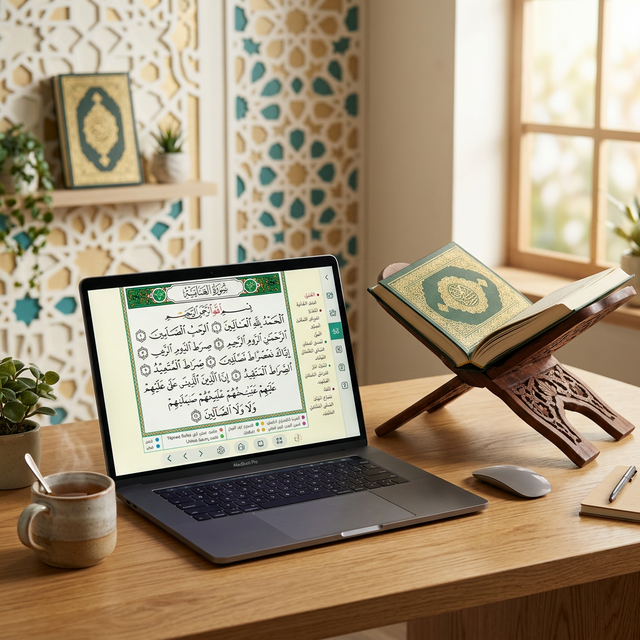
Online Quranic education has revolutionized the way modern Muslim families access religious knowledge. However, to translate virtual sessions into tangible spiritual growth, certain lifestyle and technical adjustments are required. Many parents initially worry that a screen cannot replicate the traditional classroom experience, but with the unique benefits of online learning, digital sessions can actually be more immersive than a crowded local class. Fulfilling the true importance of Quranic education requires a partnership between the student, the tutor, and the household.
1. The Sanctity of Space: Creating a Dedicated Environment
One of the biggest distractors in online learning is the home environment itself. To succeed, designate a specific, quiet corner of the house for classes. This should be away from the television, kitchen noise, or high-traffic hallways. By creating a physical "sacred space," the child mentally transitions from domestic mode into "student mode." This psychological shift is critical for young learners in their golden years.
2. Hardware Optimization: Quality Headsets and Stability
The science of Tajweed is built on the subtle nuances of sound. To catch these subtleties, students should always use high-quality, noise-canceling headsets with an attached microphone. This ensures the student hears the teacher's precise articulation and allows the teacher to correct the student's مخارج (articulation points) accurately. Furthermore, hard-wiring your device to the router can prevent the "lag" that disrupts the rhythm of recitation.

3. Punctuality and the Ritual of Wudhu
Treat the online class with the same reverence you would treat a physical mosque. Ensure the student makes Wudhu and is seated at the computer five minutes before the scheduled start time. This ritualizes the learning process, signaling to the brain that this is a pathway to spiritual success, rather than just another video call. Regularity build discipline, which is the cornerstone of daily devotions.
4. Parent-Tutor Synchronization: The Feedback Loop
Even with the most advanced teaching methodologies, the tutor can only do so much from a distance. Parents must act as the local supervisors. Spend 10 minutes after each session reviewing the new lesson with your child. This "repetition loop" is essential for long-term retention, particularly for those on the memorization (Hifz) path. For families in Western societies, this involvement is the difference between a student who merely recites and one who truly embodies Islamic values.

5. Positive Reinforcement and Rewards
Children respond remarkably well to validation. Create a simple "Quran Progress Chart" on the wall. When they master a difficult Surah or implement a Tajweed rule perfectly, reward them with praise or a small treat. This builds a positive emotional association with the Quran. Remember to maintain balance with patience and prayer; every child learns at their own pace, and the goal is a lifelong love for the Book of Allah.
Saeed Quran Academy: Your Strategic Partner in Character Building
We provide the elite academic infrastructure, but your home provides the soil. Together, we can raise a generation that is spiritually resilient and intellectually sound. Join our global community of hundreds of families in the UK, USA, Australia, and Canada. Nurturing your child's upbringing starts with a single, high-quality lesson.
Start Your Most Effective Educational Journey Today!
Sign up for your child's first lesson with Saeed Quran Academy. Experience the difference of expert 1-on-1 mentorship.
Strategic Educational Resources:
Online Benefits
Why families are moving to digital religious school.
Islamic Upbringing
Holistic character building in the modern age.